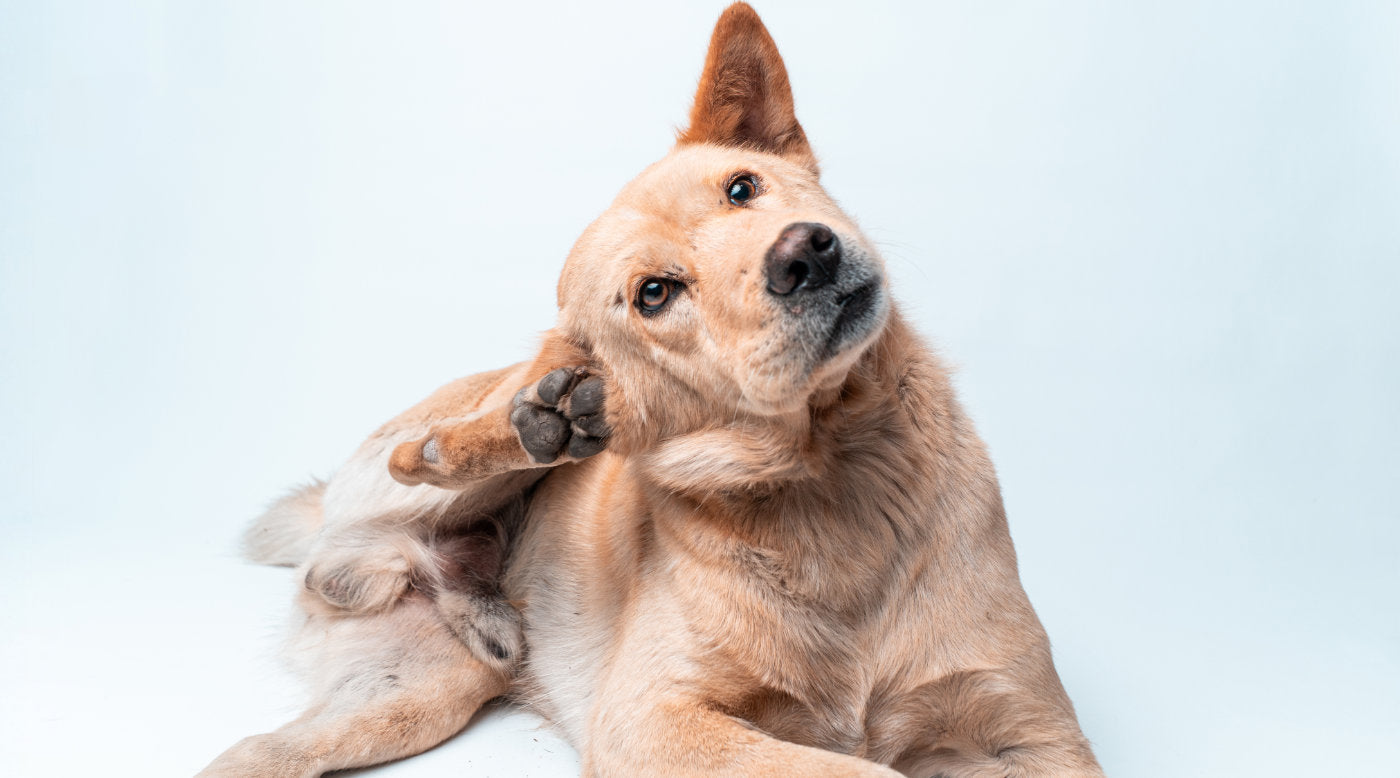



















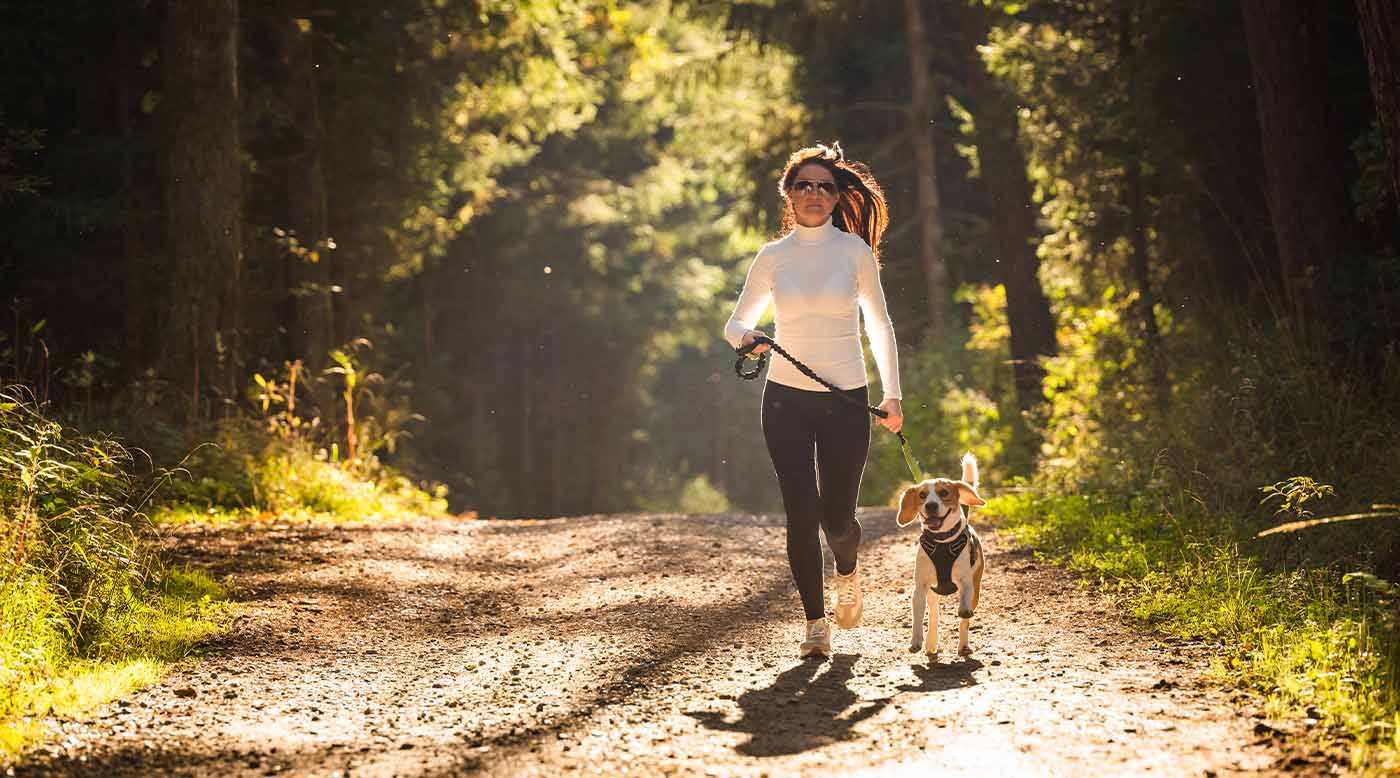
After winter, many things feel lighter again. The days are getting longer, the rounds are automatically getting longer, and suddenly we are outdoors more than indoors. Many dogs are incredibly happy about this. More scents, more pace, more adventure. And yet, this is often the very time when the body needs a moment to catch up.
Because even if your dog appears full of energy on the outside, their muscles, tendons, and joints were often less challenged during the dark months. Sometimes because walks were shorter. Sometimes because there was less varied exercise. And sometimes because we were simply more comfortable staying in. When a lot happens again suddenly in spring, it can quickly overwhelm the musculoskeletal system. Not dramatically, but noticeably.
In this article, we will explain how you can strengthen your dog's muscles and joints without overloading them, how to recognize that your dog needs more support, and which small daily exercises really help. We will also look at how a gentle physio routine can be sensibly integrated in spring, for example with our Physio-Set or Physio-Set Plus.
Why spring is a period of adjustment for joints and muscles
Your dog's body loves regularity. If exercise automatically decreased in winter, muscles atrophy to some extent, and coordination is sometimes no longer as "trained" as it is in summer. This does not mean your dog is weak. It just means the system needs to get used to longer distances, faster speeds, and changing surfaces again.
In spring, there is also something else that many underestimate: motivation. Dogs often start running again "head and heart first." They pull more, they sprint faster, and they play more intensely. And it is precisely these sudden peaks that are most likely to stress joints and muscles. Not the walk itself, but the transition between quiet and full throttle.
The terrain also changes. Instead of firm winter ground, there are soft forest paths, meadows, mud, and sand. This is great for variety, but it puts much more strain on the stabilizing muscles around the joints. If this stability has not been rebuilt yet, it can show. Perhaps not immediately as "pain," but as stiffness, hesitant rising, or a dog that gets tired more quickly after a walk than expected.
How to recognize that your dog needs support
Many dogs do not immediately show being overwhelmed through a clear limp. Often, these are quiet signals that are easily overlooked in everyday life because they seem so "normal." Especially after winter, it is worth looking more closely because the body needs to get used to increased load again. If you recognize the small signs early, you can gently counteract them before an adjustment becomes a real problem.
A typical sign is stiffness. Your dog gets up more slowly in the morning or after lying down, stretches longer, or seems "rusty" for the first few minutes. That can be harmless, especially after an unusually long walk. However, if it appears regularly or becomes more pronounced after exercise, it is a sign that muscles and joints need more support.
Gait can also change subtly. Shorter steps, less drive in the hindquarters, or a dog that is less keen on walking on uneven ground. Some suddenly avoid jumping into the car or onto the couch, even though they did so naturally before. Others become cautious more quickly while playing or stop sooner. These are often not "bad habits," but small protective reactions. The body is saying: maybe not quite so much today.
Another sign is fatigue after exercise. Not the pleasant "I had fun" fatigue, but a dog that powers down very quickly after a walk, lies down an unusual amount, or seems restless in the hours afterward. Sometimes it is also increased licking of paws or near joints, as the dog tries to regulate itself. If you have the feeling that exercise is not just fun, but lingers in an uncomfortable way, a gentle plan is worth it.
And then there is the topic of muscle soreness. Yes, dogs can also get sore muscles, especially after sudden sprints, wild play phases, or long stretches they are not used to. This often shows up the next day. Your dog moves more hesitantly, appears stiff when getting up, but walks it off after a few minutes. This is a sign that the exertion increased too quickly, not that exercise is bad.
The limit is important. If your dog is clearly limping, if they show pain, if they do not want to put weight on a paw, or if the symptoms last longer than a few days, you should have a vet clarify what is behind it.
Strengthening a dog's muscles and joints: How to build up slowly and safely
If you want to strengthen your dog's muscles and joints, the most important thought is not "more," but "better dosed." Many problems in spring arise not because the dog is exercising, but because the load increases too quickly. After winter, the musculoskeletal system needs a bit of a lead-in. The body wants to build stability again before it can go full throttle again. And exactly that order makes the difference.
A good start is not to massively extend walks immediately, but to make them more varied. A few minutes more are often okay, but quality counts. Alternating between quiet walking, short trotting steps, and conscious breaks helps to build muscles without overtaxing joints. If your dog tends to sprint off quickly, it can be useful to start the first few minutes really calmly so that muscles can warm up. Just like for us humans: going into a sprint cold is rarely a good idea.
The surface is also an important training factor. Soft forest paths, meadows, and sand challenge the stabilizing muscles more than asphalt. This is generally good, but only if you dose it. If your dog was mainly walking on firm paths during winter, a long march through a meadow in spring can suddenly be very strenuous. More variety is great, but new stimuli require adaptation. Better to have short sequences on soft ground and then continue normally again.
A classic for gentle build-up is controlled uphill walking. Slight inclines activate the hindquarters and torso without needing special exercises. It is important that your dog does not pull and does not get frantic. Calm, steady, better to do a few meters intentionally than a long stretch in continuous power mode.
For everyday life, small exercises are often more effective than big programs. You can strengthen muscles without it looking like training. For example, let your dog consciously step over curbs more slowly instead of jumping. Let them make short stops on the walk and start again. Or have them walk a few steps backward if they are relaxed about doing so. Such mini-exercises promote coordination and stability without straining the joints. And they fit perfectly into a spring routine.
Breaks are not "doing less," but a training component. Muscles build up during recovery. If you notice that your dog is stiffer the day after a more intense round, that is not a sign you have to stop, but that you should step back a gear. Building up is always an alternation between stimulus and regeneration.
Gentle physio routine in spring: how you can provide targeted support
If you notice that your dog wants to be active after winter but their body isn't quite catching up yet, a gentle physio routine can be a real gain. Not as a substitute for exercise, but as a supplement. Just like us, we become looser after a long break when muscles are well circulated and tensions are allowed to release.
Important is the attitude with which you approach this. It is not about "fixing something," but about supporting your dog's body during this adjustment phase. Many dogs benefit when certain areas are specifically supported, especially the back, hindquarters, and the muscles around the joints. Gentle applications can help the dog feel comfortable again more quickly after exercise. And that is often exactly what you want in spring: more joy in movement without that unpleasant lingering effect.
Here, our Physio-Set and the Physio-Set Plus can be meaningfully integrated into everyday life because they provide a clear routine without being complicated. It fits best into quiet moments, for example in the evening after a walk or on days you want to consciously keep things "looser." The key is that your dog remains relaxed. If they move away or do not like it, that is not a moment to "push through," but a sign that you should start shorter, gentler, or in a different place.
For many, it is helpful to build a small sequence. First a few minutes of rest, then the application, then a break again. You can start with areas your dog accepts well, for example the back or thigh muscles. A routine is good when your dog appears softer afterward, not when they "endure" it. That is an important difference.
And just as important is the limit. If your dog regularly shows pain, clearly limps, or resilience does not improve despite gentle build-up, this belongs in professional hands. Our Physio Sets can support, but they do not replace diagnostics. Recurring complaints should be clarified by a vet so that you are sure you are not working against something that needs treatment.
If you want to use this as an uncomplicated complete solution, you can schedule our Physio-Set or the Physio-Set Plus as a fixed component of your spring routine.