


















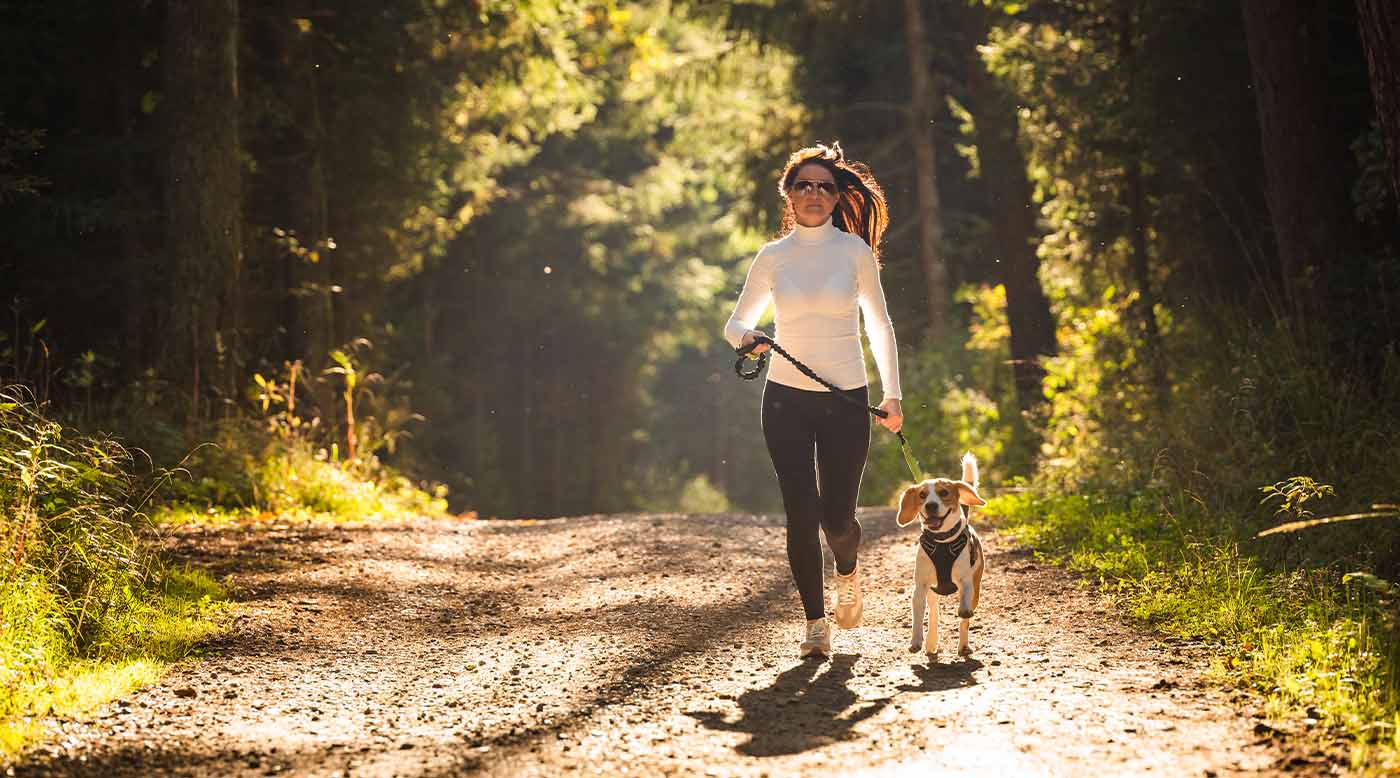
After winter, many things feel easier again. The days get longer, walks automatically become longer, and suddenly we're spending more time outdoors than indoors. Many dogs are thrilled about this. More smells, more pace, more adventure. And yet, this is often precisely the time when the body needs time to catch up.
Even if your dog appears full of energy, their muscles, tendons, and joints were often less challenged during the darker months. Sometimes this was because walks were shorter, sometimes because there was less varied exercise, and sometimes simply because you were more relaxed. When things suddenly get hectic again in spring, it can quickly overtax their musculoskeletal system. Not dramatically, but noticeably.
In this article, we'll explain how to strengthen your dog's muscles and joints without overexerting them, how to recognize when your dog needs extra support, and which simple exercises can really help in everyday life. We'll also look at how to effectively incorporate a gentle physiotherapy routine in the spring, for example, using our Physio Set or Physio Set Plus.
Why spring is a transitional phase for joints and muscles
Your dog's body thrives on routine. When exercise decreases during the winter, muscles atrophy somewhat, and coordination may not be quite as sharp as in the summer. This doesn't mean your dog is weak. It simply means their system needs to readjust to longer distances, faster paces, and varying terrain.
In spring, something else comes into play that many underestimate: motivation. Dogs often run "head and heart first" again. They pull harder, they sprint faster, they play more intensely. And it's precisely these sudden bursts of energy that are often what stresses joints and muscles the most. Not the walk itself, but the change between calm and full throttle.
The terrain also changes. Instead of firm winter ground, there are soft forest paths, meadows, mud, and sand. This is great for variety, but it puts significantly more strain on the stabilizing muscles around the joints. If this stability hasn't yet been rebuilt, it can become apparent. Perhaps not immediately as "pain," but as stiffness, as getting up cautiously, or as a dog that tires more quickly than expected after a walk.
This is how you can tell that your dog needs support.
Many dogs don't immediately show signs of overexertion, such as a clear limp. Often, it's subtle signals that are easily overlooked in everyday life because they seem so "normal." It's especially worthwhile to pay closer attention after winter, as the body needs time to readjust to increased activity. If you recognize these subtle signs early, you can gently counteract them before a change in routine becomes a real problem.
A typical sign is stiffness. Your dog gets up more slowly in the morning or after lying down, stretches for longer, or seems "rusty" for the first few minutes. This can be harmless, especially after an unusually long walk. However, if it occurs regularly or worsens after exertion, it indicates that the muscles and joints need extra support.
Even a dog's gait can change subtly. Shorter steps, less momentum in the hindquarters, or a dog that no longer enjoys walking on uneven ground. Some suddenly avoid jumping into the car or onto the couch, even though they previously did so without hesitation. Others become more cautious during play or stop sooner. These are often not "bad habits," but rather small protective reactions. The body is saying: better not to do quite so much today.
Another sign is fatigue after exercise. Not the pleasant "I had fun" tiredness, but a dog that switches off very quickly after a walk, lies down unusually often, or seems restless in the hours that follow. Sometimes it's also increased licking of paws or around joints, because the dog is trying to regulate itself. If you feel that exercise isn't just enjoyable but also has a lasting effect, a gentler approach is worthwhile.
And then there's the issue of muscle soreness. Yes, dogs can also get sore muscles, especially after sudden sprints, boisterous play sessions, or long distances they're not used to. This often becomes apparent the next day. Your dog will move more tentatively, seem stiff when getting up, but will warm up after a few minutes. This is a sign that the exertion increased too quickly, not that exercise is bad.
The important thing is to know when to stop. If your dog is clearly limping, showing signs of pain, refusing to put weight on a paw, or if the symptoms persist for more than a few days, you should have a veterinarian check what the underlying cause is.
Strengthening muscles and joints in dogs: How to build them up slowly and safely
If you want to strengthen your dog's muscles and joints, the most important thing isn't "more," but "better dosed." Many problems in spring don't arise because the dog is exercising, but because the strain increases too quickly. After winter, the musculoskeletal system needs a little time to get going again. The body wants to rebuild stability before it can go full throttle again. And this sequence makes all the difference.
A good starting point is not to drastically lengthen walks right away, but to make them more varied. A few extra minutes are often fine, but quality is what counts. Alternating between calm walking, short trots, and deliberate breaks helps build muscle without overstressing joints. If your dog tends to sprint off quickly, it can be helpful to start the first few minutes really calmly so the muscles can warm up. Just like with us humans: going into a sprint when you're cold is rarely a good idea.
The terrain is also an important training factor. Soft forest paths, meadows, and sand challenge the stabilizing muscles more than asphalt. This is generally good, but only if you moderate it. If your dog has mainly walked on hard surfaces during the winter, a long walk through a meadow in the spring can suddenly be very strenuous. More variety is great, but new stimuli require adaptation. It's better to start with short sessions on soft ground and then continue as normal.
A classic way to gently build up your dog's fitness is controlled uphill walking. A slight incline activates the hindquarters and core without the need for special exercises. It's important that your dog doesn't pull or become frantic. Keep it calm and steady; it's better to walk a few meters deliberately than to cover a long distance in constant high-energy mode.
For everyday life, small exercises are often more effective than large programs. You can strengthen muscles without it looking like a workout. For example, have your dog consciously step slowly over curbs instead of jumping. Have him make short stops and then resume walking during your walk. Or have him take a few steps backward if he's relaxed enough to do so. These mini-exercises promote coordination and stability without putting stress on the joints. And they fit perfectly into a spring routine.
Rest periods aren't about "less" exercise, but rather an essential part of training. Muscles build up during recovery. If you notice your dog is stiffer the day after a more intense walk, that's not a sign to stop, but rather that you should ease off. Building muscle is always a cycle of stimulus and regeneration.
Gentle physiotherapy routine in spring: how you can provide targeted support
If you notice that your dog is eager for exercise after winter but isn't quite physically ready, a gentle physiotherapy routine can be a real benefit. Not as a replacement for exercise, but as a complement. Just like we loosen up after a long break when our muscles are well-circulated and tension is released.
The key is your approach. It's not about "getting rid of something," but about supporting your dog's body through this transition. Many dogs benefit from targeted support for specific areas, especially the back, hindquarters, and the muscles around the joints. Gentle exercises can help your dog feel better more quickly after exercise. And in spring, that's often exactly what you want: more enjoyment of movement without that unpleasant after-effect.
Our Physio Set and Physio Set Plus can be easily integrated into your daily routine because they provide a clear structure without being complicated. They work best in quiet moments, for example, in the evening after a walk or on days when you intentionally want to take things a little easier. The key is that your dog remains relaxed. If he tries to avoid it or doesn't like it, that's not a sign to force it, but rather a signal that you should shorten the session, start more gently, or begin in a different spot.
Many find it helpful to create a short routine. First, a few minutes of rest, then the treatment, then another break. You can start with areas your dog tolerates well, such as the back or thigh muscles. A routine is successful when your dog seems more relaxed afterward, not just when they "endure" it. That's an important distinction.
And just as important is knowing when to stop. If your dog regularly shows signs of pain, is noticeably lame, or if their stamina doesn't improve despite gentle training, they need professional help. Our physiotherapy sets can provide support, but they don't replace a proper diagnosis. Recurring problems should be checked by a veterinarian to ensure you're not working against something that needs treatment.
If you want to use the whole thing as a straightforward complete solution, you can incorporate our Physio Set or Physio Set Plus as a fixed component into your spring routine.