


















Winter changes not only our daily lives, but also those of our dogs. Less daylight, cold temperatures, and limited opportunities for exercise mean that many dogs become calmer during the winter months. What initially seems harmless can, however, develop into a genuine case of the winter blues in some dogs. They appear lethargic, withdraw, or show less interest in playing and exercise.
Sensitive dogs, in particular, react strongly to changes in their environment. Shorter walks, fewer social interactions, and an overall reduced daily routine can disrupt their emotional balance. Furthermore, dogs are very attuned to their owners' moods. Stress, fatigue, or winter lethargy are often unconsciously transferred to the dog.
In this article, we'll explain how to recognize winter blues in your dog , why the darker months affect their well-being, and how you can specifically support your dog to keep their body and mind balanced during the winter. This isn't about taking drastic measures, but rather about small, effective adjustments to your daily routine that provide your dog with security and relaxation.
Winter blues in dogs – not a myth, but a natural reaction
Dogs rely heavily on consistent routines, regular exercise, and external environmental stimuli . These constants provide them with security, orientation, and emotional stability. When these conditions change, not only their behavior but their entire organism reacts. This is precisely what happens during the darker months. Winter brings less light, lower temperatures, and a disrupted daily rhythm , affecting both body and mind.
Less daylight directly affects the natural circadian rhythm. Dogs are also sensitive to this, as light controls processes that regulate activity, alertness, and rest periods. Walks often take place in the dark, become shorter, or are canceled altogether in bad weather. At the same time, cold weather causes muscles to tense up more quickly and joints to become less flexible . Exercise feels more strenuous, even for dogs that are usually active.
Another often underestimated factor is the mental aspect. Outings, training sessions, new stimuli, and encounters with other dogs are frequently reduced in winter. For many dogs, this means less mental stimulation and less variety . The body reacts to this by conserving energy. This adaptation is generally normal and even beneficial. However, if this state persists for several weeks , it can lead to a noticeable dip in mood, which becomes clearly evident in everyday life.
Winter blues in dogs is therefore not a sign of weakness or illness , but a natural reaction to changing living conditions. The key is to recognize these signals and consciously support the dog during this phase.
How to tell if your dog is suffering from winter blues
Winter blues in dogs rarely manifest suddenly or clearly. Instead, it's often subtle, gradual changes that become noticeable in their daily routine. Precisely because these signals are subtle, they are frequently overlooked or dismissed as normal winter rest. However, it's worth taking a closer look.
Many dogs seem calmer overall during the darker months and sleep more than usual. They take longer to get moving in the morning and show less motivation for walks or play. What was once enthusiastically embraced suddenly seems strenuous or uninteresting. More rapid fatigue can also indicate that their body and mind are under greater strain.
Typical signs of winter blues in dogs can include:
- significantly increased need for sleep
- reduced enjoyment of play and activity
- slower start-up during movement
- faster fatigue
- more sensitive reaction to cold
- increased withdrawal or increased need for rest
Older dogs , very sensitive dogs , and dogs with existing muscle, joint, or movement problems are particularly affected. External stresses in winter often have a more intense impact on them and affect their mood more quickly.
It's important to understand that winter blues isn't a dramatic problem , but it is a serious signal. It indicates that your dog needs support to adapt to the changing conditions. Recognizing these changes early allows you to take targeted action and ensure your dog feels safe, secure, and comfortable throughout the winter.
When cold seeps into your bones – joints and muscles in winter
Cold temperatures directly affect blood circulation and thus have a noticeable impact on muscles, tendons, and joints. At low temperatures, these areas are less well supplied, muscles lose elasticity, and joints become stiffer. Movements that are effortless in summer feel significantly more strenuous for many dogs in winter.
Dogs with age-related changes , arthritis, or previous injuries are particularly affected. Many owners notice that their dog gets up more slowly in the morning, seems stiffer after walks, or consciously avoids certain movements. Lying down or getting up more cautiously can also be a sign that the joints and muscles are under greater strain.
These changes are often dismissed as a normal part of aging. But even if such processes are age-related, that doesn't mean they have to be simply accepted. Targeted support can make all the difference by maintaining mobility, promoting circulation, and helping the dog feel more comfortable in its body again.
When exercise becomes uncomfortable, not only does the body suffer, but also the mood. Dogs withdraw more quickly, become more cautious, and lose their zest for life. This makes it all the more important to observe them carefully in winter and take timely countermeasures so that the cold doesn't become a permanent strain on their joints, muscles, and overall well-being.
Exercise in winter – gentle rather than less
Even when it's cold, wet, or unpleasant outside, exercise remains essential for dogs in winter. It's not about taking the longest or most strenuous walks possible. What's crucial is regularity and adapting the exercise to the season and the individual dog.
Several short walks are often more beneficial than infrequent long ones. They keep muscles active, promote blood circulation, and help maintain joint mobility. At the same time, they don't overexert the body and allow the dog sufficient time to recover. Older or sensitive dogs, in particular, benefit from this gentle rhythm.
It's important to adjust your pace. Walk a little slower, take deliberate breaks, and don't force your dog into movements that are clearly difficult for him. Exercise should be supportive in winter, not strenuous . If your dog lies down relaxed after the walk instead of appearing stiff, that's a good sign.
Wellness at home – relaxation and regeneration with our emmi-pet Physio Set
After exercise in the cold, the body needs support to relax. This is precisely where the wellness effect comes into play, which is so valuable in winter. Our emmi-pet Physio Set Plus was developed to gently support dogs after physical exertion and specifically promote regeneration – all in the comfort of your own home.
The application can help relax muscles, stimulate blood circulation, and relieve tension after being outdoors . Many dogs find these quiet moments particularly beneficial after walks in the cold. They calm down more easily, appear more balanced, and consciously let go.
The Physio Set Plus with bandages allows for targeted application to areas that are particularly stressed in winter. The bandages ensure that the ultrasound is delivered precisely where it's needed, such as to joints, tense muscles, or sensitive areas. Many dogs quickly associate this treatment with relaxation and closeness , which further enhances the positive effect.
This way, self-care becomes a regular daily ritual. Outdoor exercise, followed by warmth, rest, and targeted support indoors. This combination of activity and relaxation helps the body adapt better to winter conditions and also has a positive effect on emotional balance.
Caregiving as an emotional anchor in winter
Grooming in winter is far more than just a supportive measure for the body. It becomes an emotional anchor , providing security, closeness, and orientation. Especially during a time of year when external stimuli are scarce and daily life becomes quieter, recurring rituals gain enormous importance for dogs.
A set moment after the walk, a calming exercise, gentle touches. All of this signals reliability to your dog. Here I can let go. Here I am safe. This emotional component is especially important when the winter blues are felt not only physically but also mentally.
Many dogs are more sensitive to changes in winter, withdrawing more easily or appearing restless. Grooming can have a stabilizing effect in these situations. It creates conscious closeness, strengthens the bond, and gives the dog the feeling of being seen and cared for. Sensitive or older dogs, in particular, benefit from these calm, recurring moments , which help them find stability in their daily lives.
When care is provided mindfully rather than hastily, it becomes an integral part of well-being, a shared moment. This has a positive effect on mood and can help to gently cushion emotional lows during the winter months.
The mouth area also suffers in winter.
One area that is often overlooked in winter is the oral cavity. Yet this area is particularly sensitive to typical winter conditions. Dry air from heating systems can dry out the mucous membranes , saliva production decreases, and the natural balance in the mouth is more easily disrupted.
Furthermore, around the holidays and during the colder months, there are often more treats, chew toys, or special snacks. These put additional strain on the mouth. If plaque remains on the teeth and gums for an extended period, it can lead to irritation, especially in dogs that are already more sensitive.
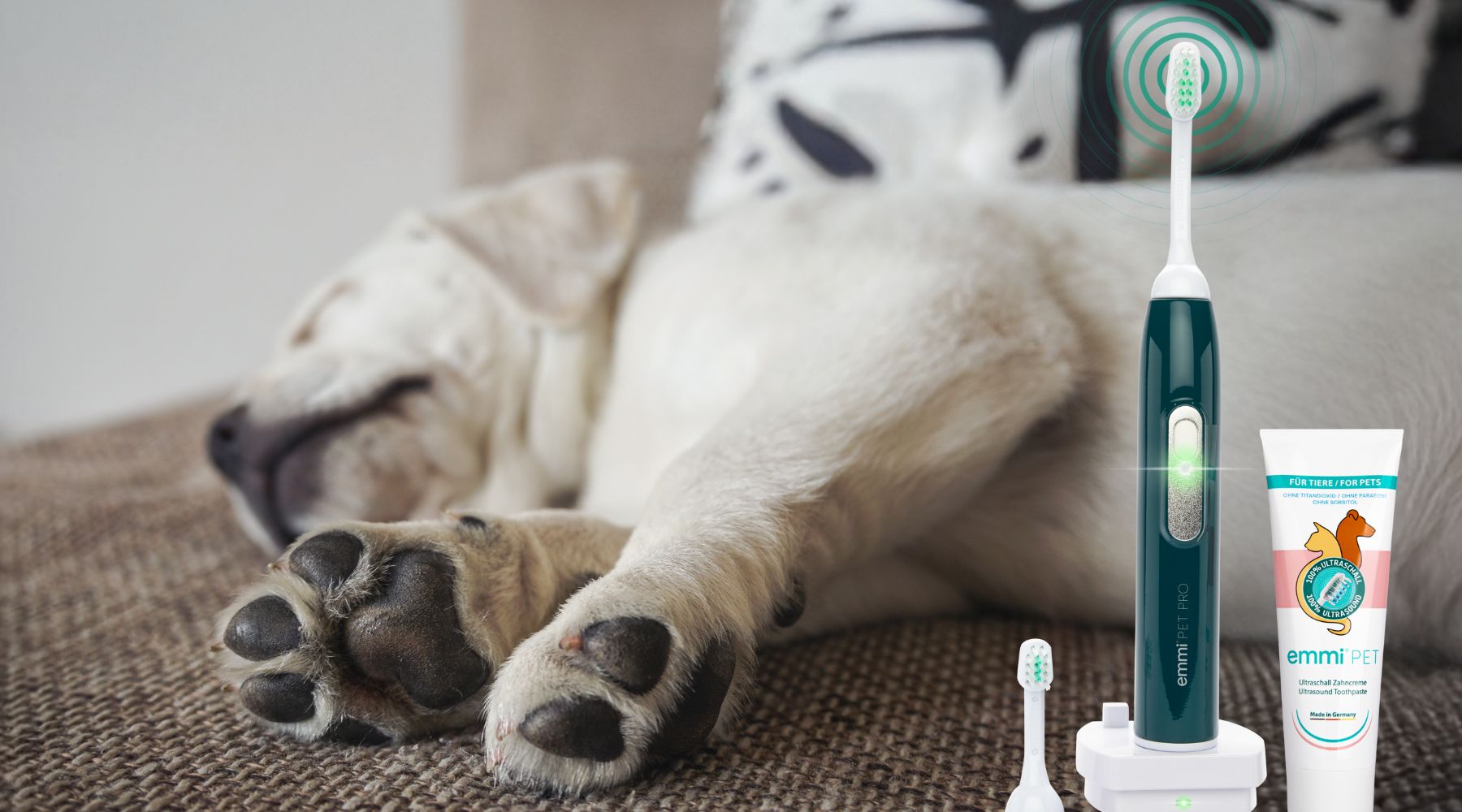
Gentle dental care helps support oral balance without causing additional stress. Our emmi-pet ultrasonic toothbrush, included in the emmi-pet Pro Basic Set, operates silently and without pressure. This makes it ideal for dogs that are more prone to stress in winter or are sensitive to touch around the mouth.
Especially during quieter winter periods, dental care can be easily integrated into everyday life. It can become a regular part of an evening ritual or a quiet moment after a walk. In this way, dental care doesn't become a challenge, but rather another building block for well-being, closeness, and trust.
Small routines to combat the winter blues
You can't change winter, but you can make it much more pleasant for your dog. Often, it's not big measures, but small, recurring routines that stabilize their body and mood. These provide orientation, security, and help your dog adapt better to the changing conditions.
These routines have proven particularly effective in winter:
- Fixed daily routines that give your dog structure and reliability
- Regular, appropriate exercise , preferably short and gentle rather than infrequent and strenuous
- Targeted care after walks to support muscles and joints
- Quiet activities at home that provide mental stimulation without being overwhelming
- Conscious closeness and affection as emotional compensation during periods of low stimulation
- Gentle dental care as a ritual to keep the oral cavity in balance.
This combination of physical support and emotional security is often more powerful than you might think. It helps your dog not only to get through the winter, but also to feel comfortable during the cold season.